TL;DR: Dimensionar correctamente su enfriadora industrial es esencial para evitar cuellos de botella en la producción o desperdicio de energía. Mediante la fórmula termodinámica fundamental $Q = \dot{m} \times C_p \times \Delta T$, los ingenieros de planta pueden determinar con precisión la carga de refrigeración requerida. Recuerde siempre añadir un margen de seguridad del 15-20% para tener en cuenta las ganancias de calor ambiental y las futuras ampliaciones de producción.
Contenido:
Uno de los errores más frecuentes y costosos que se cometen durante la adquisición de un Enfriador de procesos industriales El dimensionamiento incorrecto es un problema grave. Calcular a ojo la capacidad de refrigeración necesaria conduce invariablemente a dos escenarios desastrosos: un dimensionamiento insuficiente provoca que el enfriador funcione continuamente sin alcanzar nunca el punto de ajuste, lo que causa graves retrasos en la producción y compromete la calidad del producto; un dimensionamiento excesivo provoca un "ciclo corto" (el compresor se enciende y se apaga con demasiada frecuencia), lo que acorta drásticamente la vida útil del equipo y desperdicia enormes cantidades de electricidad.
Para eliminar las conjeturas, los ingenieros se basan en una ecuación termodinámica fundamental para calcular la carga de enfriamiento precisa ($Q$). La fórmula es $Q = \dot{m} \times C_p \times \Delta T$. En esta ecuación, $\dot{m}$ representa el caudal másico del fluido que necesita enfriarse (a menudo medido en galones por minuto o litros por minuto, convertidos a masa). $C_p$ es el calor específico del material que se enfría (para el agua, este es 4,18 kJ/kg·°C). Finalmente, $\Delta T$ es el diferencial de temperatura: la diferencia entre la temperatura de entrada del fluido del proceso y la temperatura de salida deseada.
Una vez calculada la carga térmica base en kilovatios o toneladas de refrigeración, la práctica recomendada en la industria es añadir un factor de seguridad del 15 % al 20 %. Este margen compensa las pérdidas de calor inevitables a través de tuberías sin aislamiento, las temperaturas ambiente inusualmente altas en verano y el calor mecánico generado por las bombas de circulación.
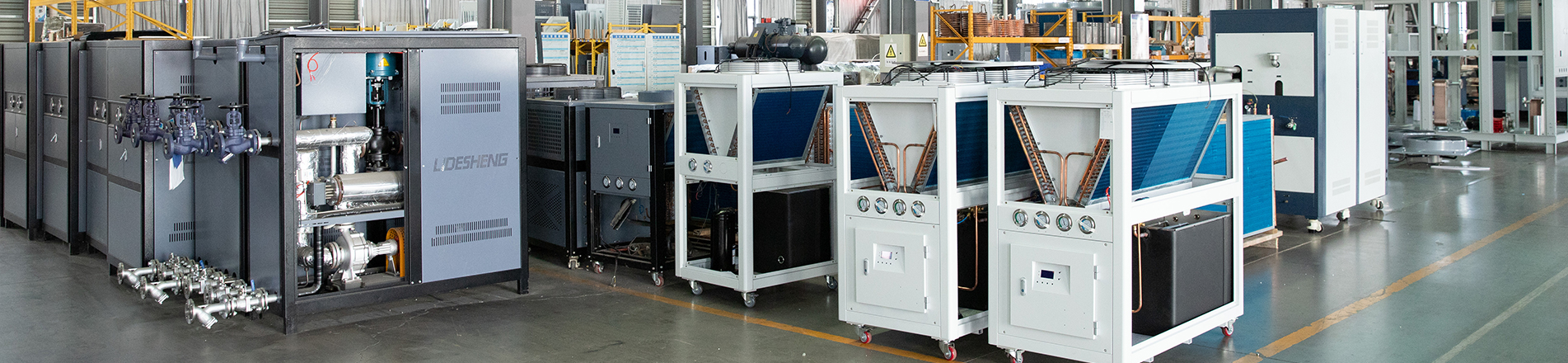
Para muchas aplicaciones de fabricación de tamaño mediano, como el moldeo por inyección de plástico especializado o la elaboración de cerveza a escala media, se necesita un Desplazamiento enfriador Ofrece el equilibrio perfecto entre la adaptación precisa de la capacidad y la eficiencia energética. Si su diseño de producción es altamente dinámico y requiere que la refrigeración se traslade entre diferentes máquinas según la demanda, invertir en un sistema robusto es una excelente opción. Enfriador portátil Su facilidad de reubicación en toda la planta de producción proporciona la máxima flexibilidad operativa, al tiempo que garantiza una entrega precisa de la temperatura exactamente donde se necesita.
Palabras clave SEO para este artículo:
1. Cálculo de la capacidad de refrigeración de enfriadores industriales
2. Cómo dimensionar un enfriador de agua
3. Fórmula para el cálculo del tonelaje del enfriador
4. Dimensionamiento de enfriadores industriales portátiles
5. Guía para el cálculo de la carga de refrigeración del proceso
 English
 Español
 عربي
عربي Melayu
 Tiếng Việt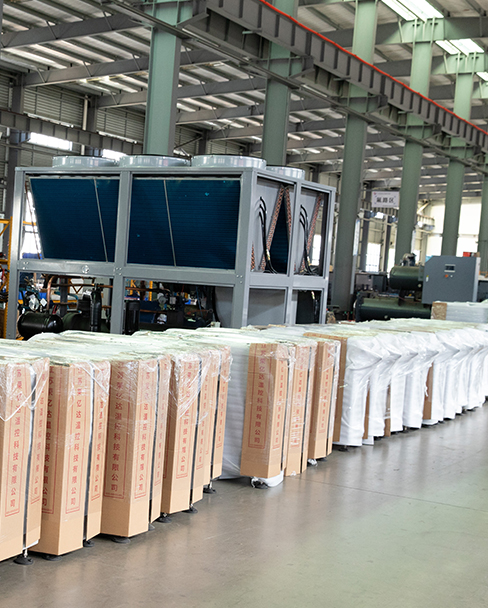





 IPv6 RED SOPORTADA